|
| Factories and Green Pastures with happy beasts around |
 |
| Happy in Gods place amongst Gods wealth |
After reading the Novel ” River God” written by Wilbur
Smith I had an intense urge to see the beautiful blue Nile. Had not even an inkling that I would ever go to Ethiopia and realize my dream.
Visit to North-Western
part of Ethiopia gave me a stunningly beautiful view of Nile and its waterfall
but also the source of Nile.
Bahir Dar / Bahar Dar is the capital of Amhara region, and
has the magnificent, huge water body The Tana Lake. This is the lake which is
the source of Blue Nile. Since we were touring this part of Ethiopia in the
month of May I was not expecting much greenery on the way from Addis to Bahir
Dar, but came across enchantingly beautiful green expanses with cows, goats and
sheep grazing totally undisturbed by the passing vehicles. In few places
factories and power stations were appearing like scars on a beautiful skin, but
then again these are the necessary evil for the development of any country.


Nicely laid good roads, thin traffic and moderate weather
made our journey comfortable and enjoyable. The silence of the hills and the
valley was disturbed by occasional vehicle passing by. Few old monasteries
which one can access only on foot are on the hills dotting the road.
As we crossed some 50 km. the greenery gave way to rocky
patches. It is sheer will power and capability to sustain the hardship that
people live in this rocky, dry water deficient terrain. The color of soil and
the rocks changed from brown to red, black and sometimes pure shining white,
with green shrubs making appearance every now and then. It seemed as if God has
splashed all colors at random.


One can go by flight also from Addis to Bahir Dar. We
opted to go by road because it gives the opportunity understand the country and
its culture by close interaction with locals in the country side. The few
picture taken on the way to Debra Marcos and then from Debra Marcos to Bahir
Dar will make one understand that why going by road makes the trip more
interesting.


Since we had left Addis late we reached Marcos by 7 pm.
Our driver refused to proceed further after dark citing safety reasons thus we
made a halt at Marcos. Marcos has good hotels and food nice even for
vegetarians like us. It also has a airodrome.

Tired we hit the bed early and started our journey after a sumptuous breakfast of eggs, sandwiches and
coffee. The greenery started appearing again as there are enough water pockets
I and around that area. Lemons, banana, sweet lime and many local fruit
plantations, maize, wheat and many vegetable patches were making the whole area
a pleasing site to the eyes. Vast green pasture with a huge rock in the middle
was an incredible sight. We were told it is a tourist place but since we were
getting late we did not stop there. I just wanted to be near the river of my
dream.

Our hotel was almost at the lake side. The rooms were
spacious and comfortable, staff courteous and lobby well decorated.


On inquiring about Tana Lake we were told by the person at the desk dump the bags in room and grab the cameras rush, last boat is to leave in 30 minutes.
We hired a boat and off we were to the Tana Lake. Oh my God!
Is it a lake? Or part of sea? I could
not see the other end of lake. Big waves were splashing our boat. We were
refreshed immediately by cool breeze.


The lake is 84 km. in length and 64 km. wide. There are
small islands lush with green thick bush, huge trees and each has a monastery.
Only few monasteries allow female entries thus we went to two of them which
allowed ladies inside. Males and female
of all age are free to come and practice religion and become nun/monks in this
monastery. It is not only human but animals and birds also find a peaceful
sanctuary in these islands.


Entry fee for the locals is 10 bir and for
foreigners 100 bir. Until unless one is hard core church goer and plans to make
this visit a pilgrimage one island visit is good enough, instead take a good
round trip of the few islands and enjoy the boat ride.


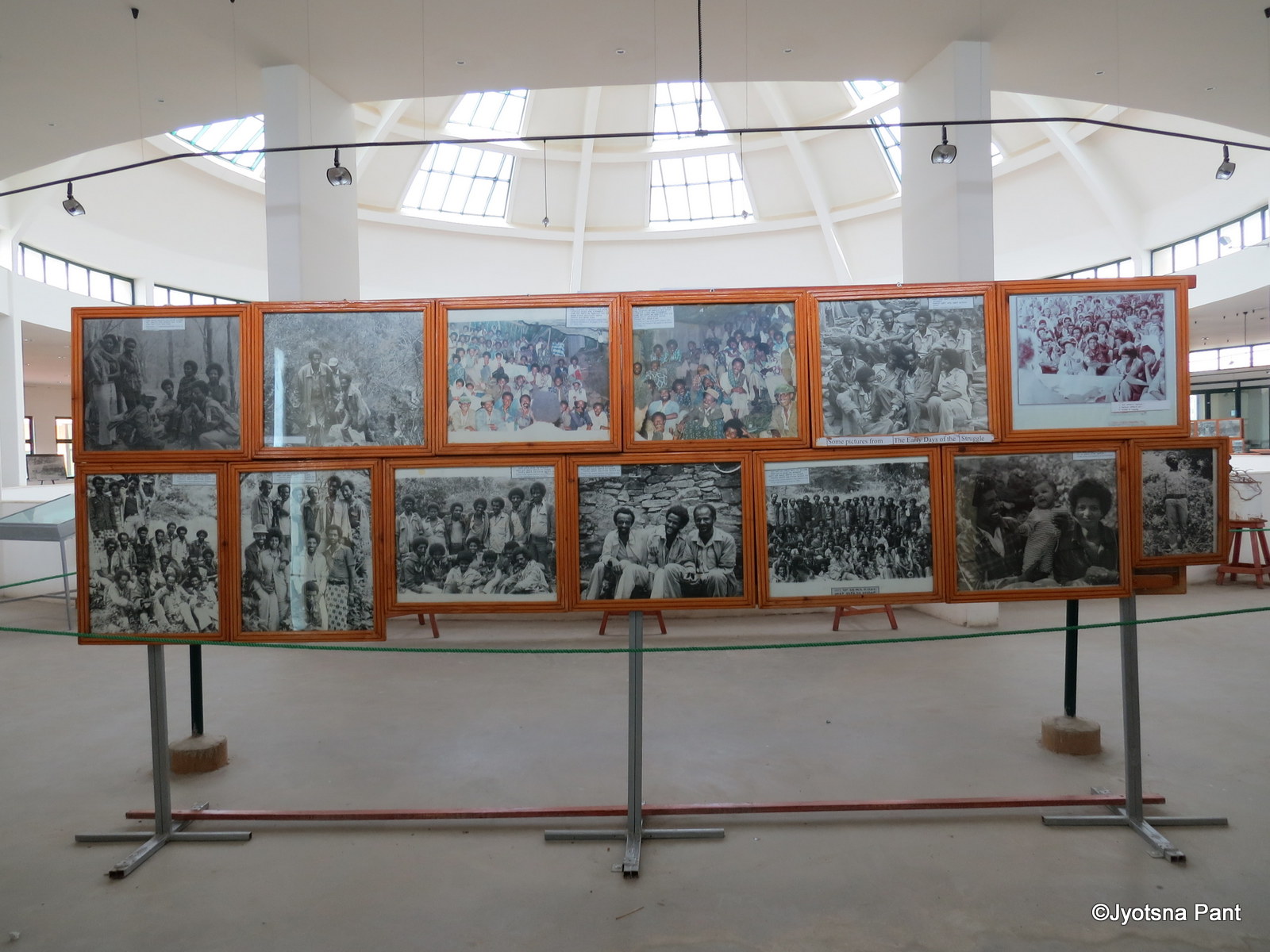
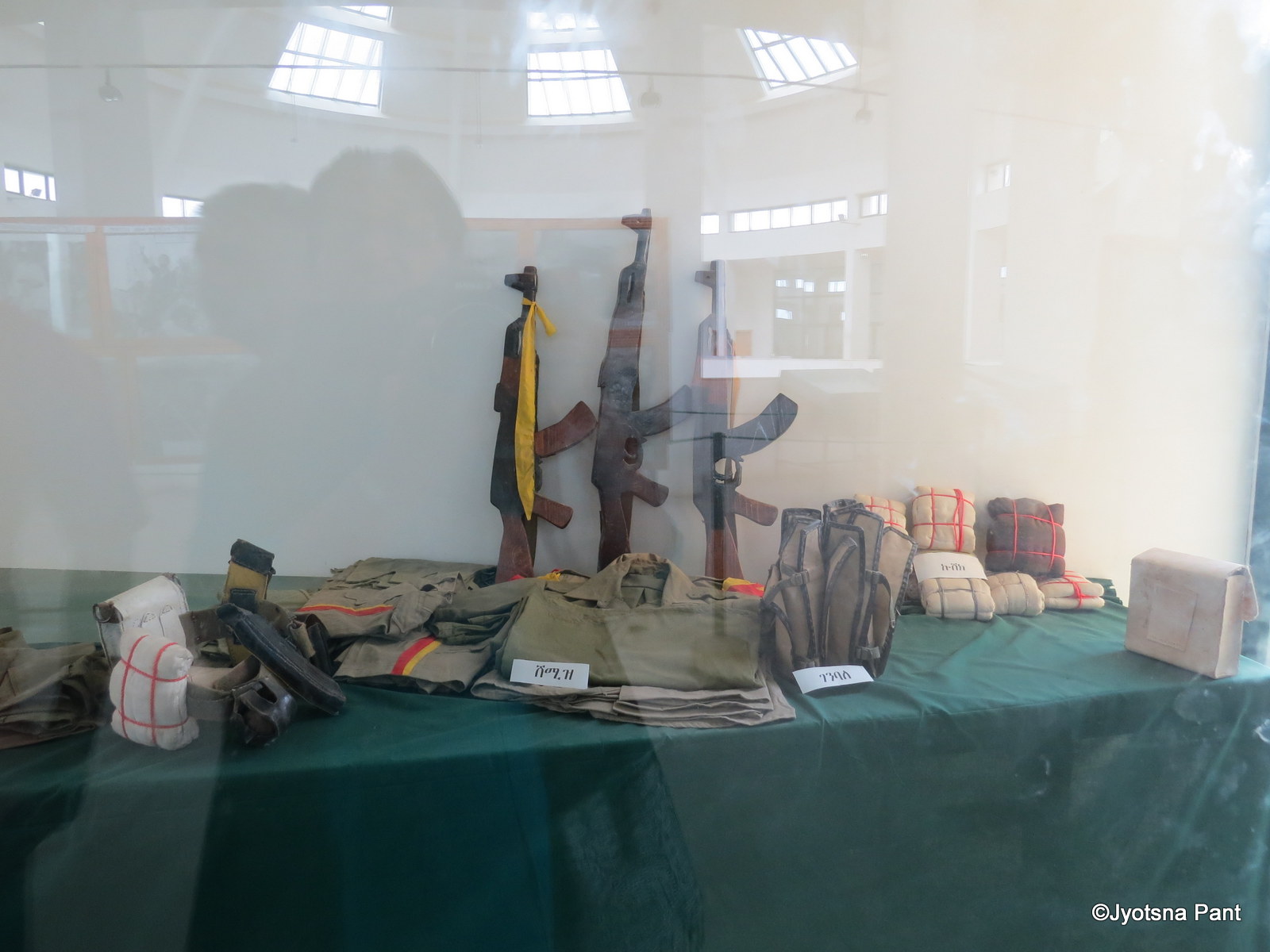
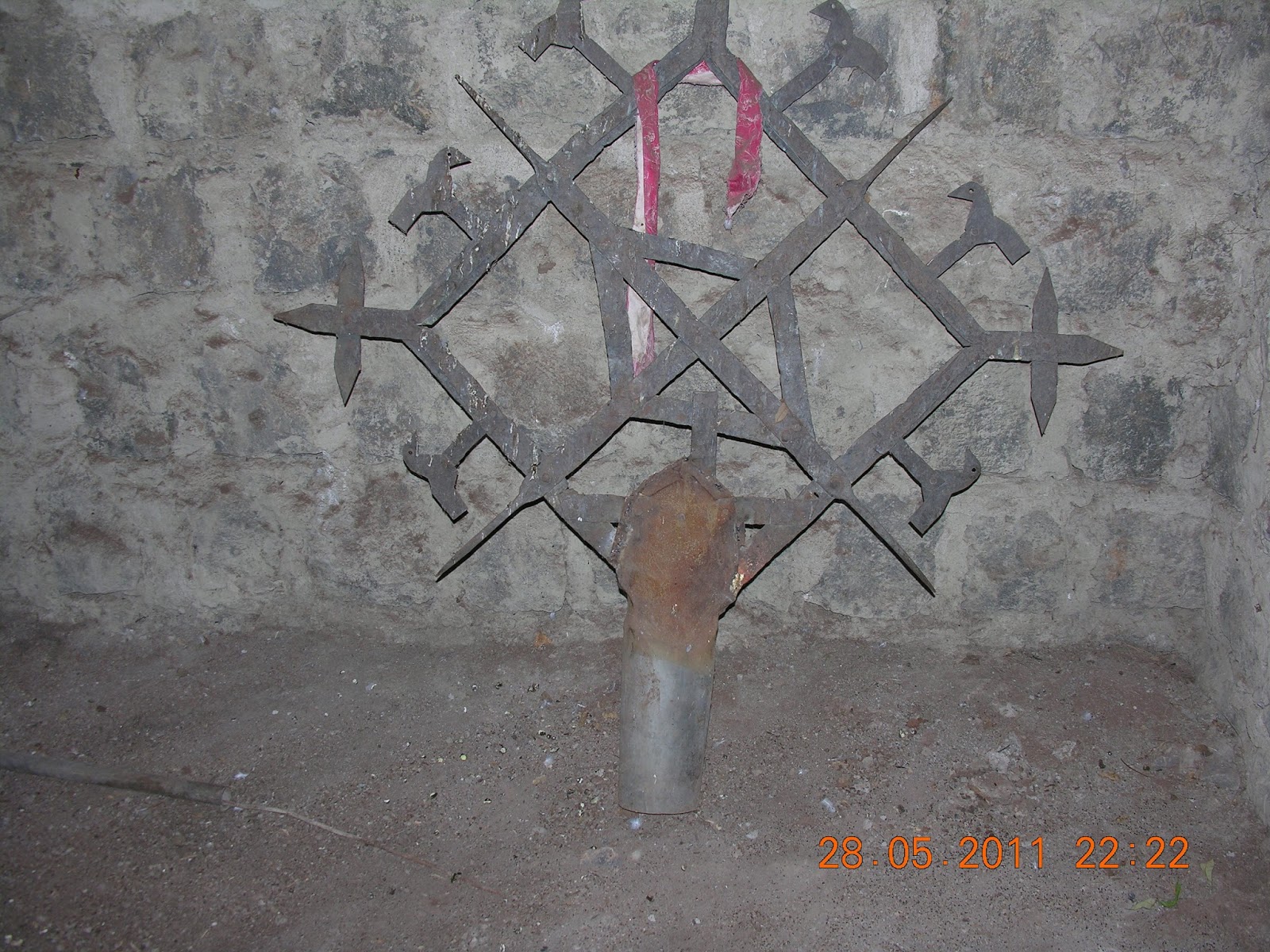
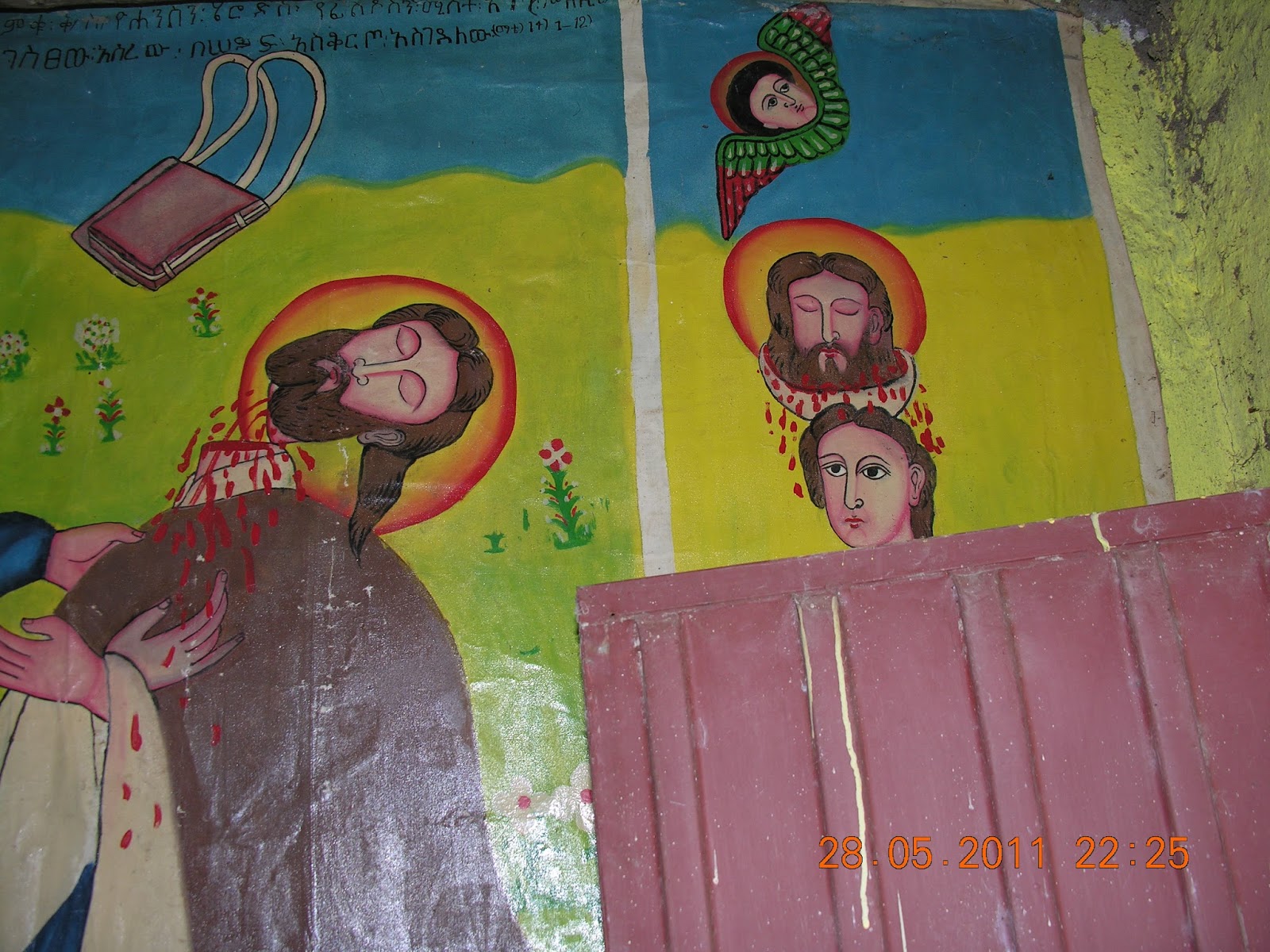
The destruction done by Derg regime to the relics and the sacred caves, holy books was evident from the very first sight. Whatever is left is kept in the small rooms till a full museum comes up. These relics, paintings depict the tyranny of rulers and the great sacrifice made by religious people to keep the christtianity alive in the country.



As the waves start becoming high after 2-3pm. Thus the
boatman wanted to finish the ride by that time. Small rocky patches has birds
of different color size and species busy fishing and gulping their delicious
fresh meal.


Till 2012 government of Ethiopia was using the boats
captured from Derg and Italians thus they were not sturdy to take the might of big
waves and strong flow.
And then came the time of reckoning. We were taken to the
point from where the Blue Nile goes out from Tana Lake. It is beyond words to
express how and what I felt. I was mesmerized and was thinking of next day when
I will see the real Blue Nile. Thanks to Wilbur Smith for arousing this
curiosity in me.


Second Island we visited had marshy land and thus Hemp
was growing plentiful there. Boys were making boats from reeds, people crossing
the river by the reed boats to reach the island while the river flowed
peacefully as if saying we are made for each other. I was wishing the time to
stop so that I can devour this moment till eternity.


This island is inhabited and has a small village with
mango, guava, banyan and other trees. For an avid bird watcher it is the must
visit place because water, plants of all size and shape provide peaceful safe
sanctuary to birds. People in Ethiopia do not kill and other birds except fowl
as they consider it a sacrilege. Their belief has proved a boon to avian life
in Ethiopia.


Boatman was getting jittery so we gave in to his demand
and started our boat ride back with happiness and satisfaction written large on
our face. I had taken some amazing photos and of course memories to last my
life time.

I would have loved to be here for one more day but our
next day was again a long road trip to Gondar, a citadel of kingdom of king
Yohhanes.
City of Bahir Dar is safe to be ventured in night. But it
is advisable not to carry valuable (to be on the safe side).
Folk dances are held in small houses. The drifting music
was very pleasing. The dingy bars are to be avoided. Drink in good hotels but
keep a distance from local pubs. Good pizza, burger joints can be enjoyed, as
many places serve excellent veg / non-veg pizza, club sandwiches aerated
drinks and fragrant, world famous Ethiopian coffee.
 |
| An Ethiopian couple enjoying Beer |
With a sumptuous dinner of pizza and coffee we saw the
city in night and prepared for next day trip to Gondar and from Gondar to my beloved Nile.
More from this blog of beauty of Ethiopia.
More from this blog of beauty of Ethiopia.