Tuesday, 2 June 2015

Glimpse Of Ethiopia: Part 3: Mekhele

War Memorial For The Martyr of Liberation Struggle
One of the stone carving showing the Liberation Struggle
It was our last leg of visit to Northern Ethiopia.We had seen some fabulous places, churches, excavation sites, steles and the now we were proceeding towards Mekhele from Axum by road.
The roads leading to Mekhele are very good, journey was fabulous as the weather God was on our side. Heavily clouded sky and hills along with the huge open expanse of land and green valley was breathtaking. 

Coffee shops with green grass spread all over the floor for coffee ceremony started dotting the road once we neared the city. Ethiopian coffee is of world fame and we stopped in one such shop for the fragrant thick black coffee.


We were told that this city is as important to Ethiopians as is the holy city of Lalibella. I kept on wondering why it is so. Once we neared the city I could see the difference between Axum and Mekelle. Construction work was going on in full swing and the difference between a city sitting atop an ancient civilization and a industrial city was quite visible.
Ethiopia due to very less population has large expanse of un-inhabited land. Due to lack of irrigation facilities even the fertile land lies fallow. Development had taken back seat during the regime of Col. Mengistu Haile Mariam, but now with the help of international agencies, private and corporate investors it is development is gaining pace.
Mekelle is Educational, Political, Cultural and economic hub in Northern Ethiopia. If Lalibella was a mecca for faithful and Axum for historians and archeologists, then Mekelle is the mecca for students, industrialists, investors and last but not least for all Ethiopians, because it has the TPLF war memorial. TPLF fought in tough conditions with the Derg regime to over it throw and end their tyranny.
This article is my humble effort to pay homage to the great leaders who liberated the people of Ethiopia from the tyray of Derg Regime.
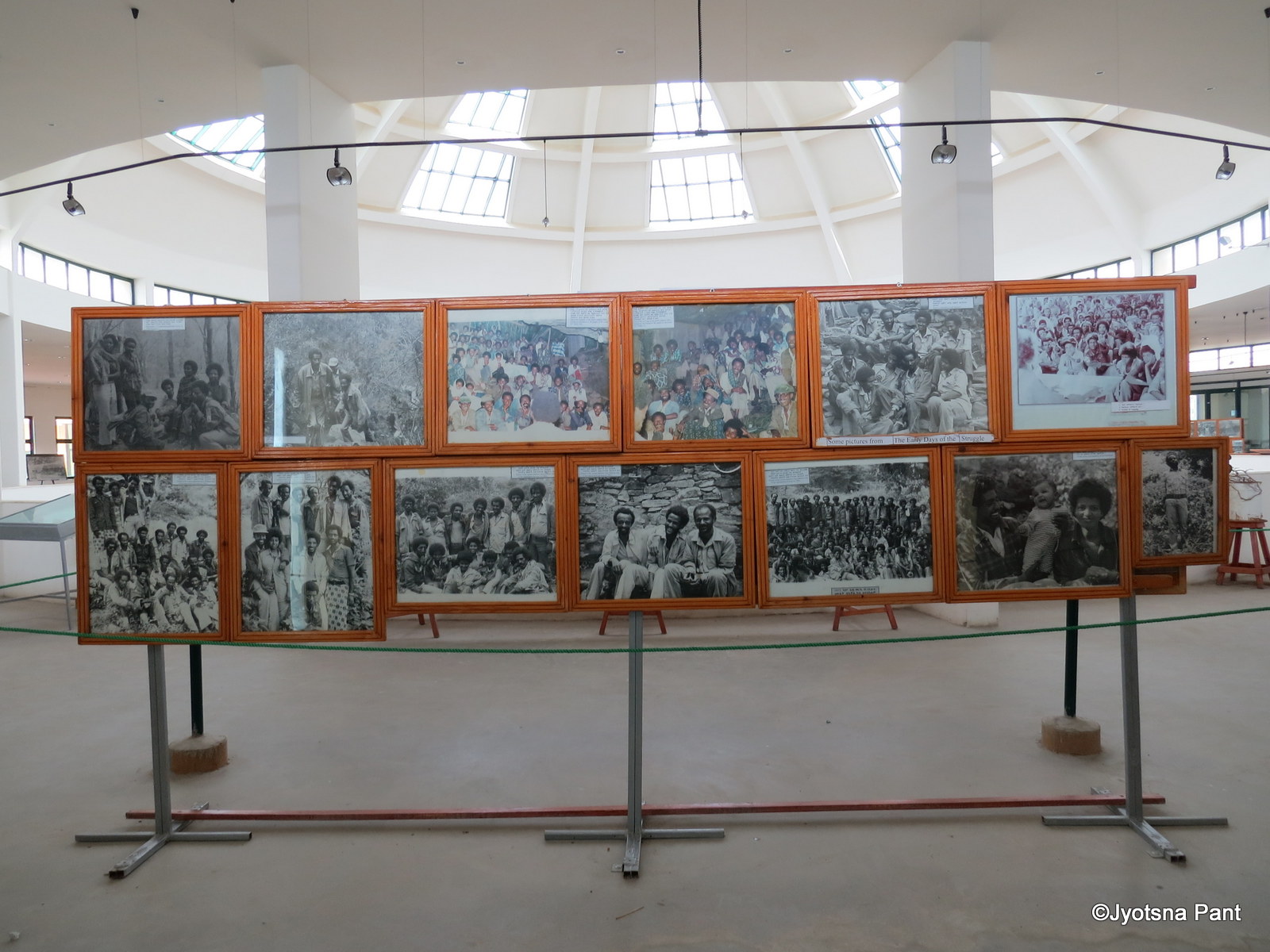
The memorial gives a peek into the liberation struggle of Ethiopians and the sacrifices of the people connected with the freedom struggle. The steps leading to the ground of the museum give a majestic view of the memorial. 


On the open space near the memorial the struggle and the harsh conditions which the people endured are displayed carved on red stone.

Near the museum is displayed the message from Late.Prime Minister Meles Zwnavi and a short hidtroy of what we are to see in the museum. Museum is divided into many sections displaying photographs, weapons, equipments used during liberation struggle, and some charts and trophies of Ethiopia progress after leberation.


Pictures ranging from late 70’s to 1990 depicting the life under Derg regime, harsh conditions under which the TPLF worked relentlessly to achieve the goal of Ethiopians i.e. Liberation from the tyrannical Derg and the villagers helping the TPLF despite of danger of being caught and tortured ? killed the Derg followers. It was heart wrenching details of the torture which I had read in the history book written by a Proffessor of University of Adis Ababa. 


Painting made on sheep skin using natural paints are on display. The pain which Ethiopia feels even today remembering tose days is evident in these painting.

Display of the weapons which were used against the Ethiopians by their own “The People of Derg” who had come to power with slogan like"Farmers land to farmer" and "Job for all Etiopians",  and those which were used during fight for liberation are on display. I was totally confused by the emotions I felt in the museum of war memorial. Weapons are weapons, they are used to kill, yet one set was bringing smile on my face and the other set which were used by Derg brought anger and sadness.


What differentiated the two sets of weapons? One is used for oppression of poor, vulnerable and innocent people who had over thrown their Emperor Haile Sialse and treated him most disrecpfully even after slaughtering him to pieces. The other for their liberation from the oppression. As a tourist and one who stayed in Ethiopia for just two years could feel such strong emotions what the Ethiopians must be feeling while in the memorial? I was overwhelmed with emotions.
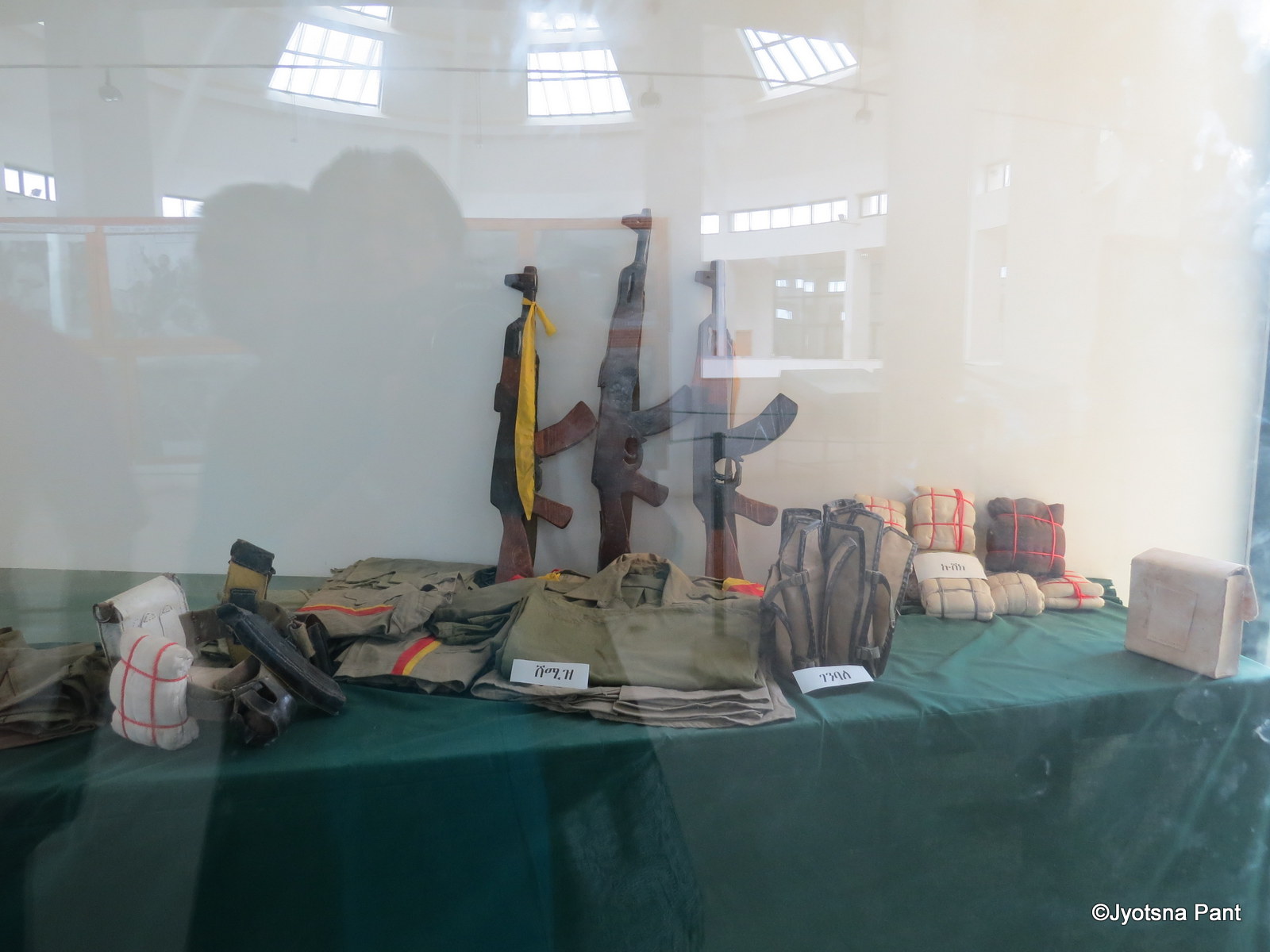

These equipments which were used during struggle wil make one understand that how determined the people of Ethiopia were to through out Derg regime, because to get weapons and equipment was next to impossible during tight scrutiny by Derg.


The goose bumps and the glint in the eye of the guide while telling the stories of TPLF was enough to make me understand why this city and the museum is so important to Ethiopians.
These charts and trophies display exude the pride Ethipians feel in what they have achieved short time. 

Those who can afford pay homage on the day of anniversary of liberation and those who cannot watch the ceremonies on TV ( All villages are not having electricity and every body there can not afford telivision) go to churches to pray for the people who sacrificed their life for the future generation.
People may be poor in Ethiopia but take great pride on their cultural heritage and rever Late Meles Zenavi and the TPLF people. 
Mekelle has churches, Palace of King Yohhanes IV who made Mekelle his capital after being crowned the King of Ethiopia.
Mekelle has university, technical education centers, cement and iron industries and many more are coming up. We did not get time to visit all the places but what we saw was enough to make me think highly of the people of Ethiopia, who are happy and free spirited. They will not accept oppression from any body, internal or external forces alike.
Tigriya is the main language of this place followed by Amharic.

Hotel Planet where we stayed had a good view, spacious and clean rooms. Since the internet is quite erratic and slow in Ethiopia thus the dismal Wi Fi and the mobile connectivity did not surprise us much. Hope after 3 years it must have improved.  The breakfast is buffet so we had a choice of fruits and toasts/eggs, but a la carte was not such pleasant experience as many vegetarian items in menu were not available( do not know about non-veg items). Being a vegetarian was certainly tough some times.
Over all experience was good the staff well trained and courteous.
This leg of tour was coming to end. I wanted to go to Afar region, (where Lucy was excavated), we could not go due to safety reasons. We had to fly next day to Addis and then drive down to Debrezyiet, to enjoy  the greenery and cool breeze, natural lakes and great weather
Auditorim For showing Audio-Visuals of Struggle for Liberation from Derg Regime

Thursday, 28 May 2015

Glimpse Of Ethiopia Part 2: Axum (Aksum / Aksoum) A Lost Civilization

On the way to Axum from Lalibela
Axum airport
Close up view of Axum from hotel
Visit to Northern Ethiopia is incomplete without a visit to Axum (Aksum), the earlier day capital of Ethiopia, center of business mainly with Ancient India and Roman Empire. Axumite king minted their own coins to facilitate business. The city which we see today is mainly post 1st century. Old civilization lies buried deep in earth. Being in seismic zone the old civilization of Axum must have got buried in the womb of mother earth.
Geeze an ancient language from which Amharic (National language of Ethiopia) is evolved, is the main language of this whole region.
A German Archeologist along with his team did much of excavation on the hills and what he discovered is an amazing maze of tombs of kings and nobles, pottery, coins, beads etc.
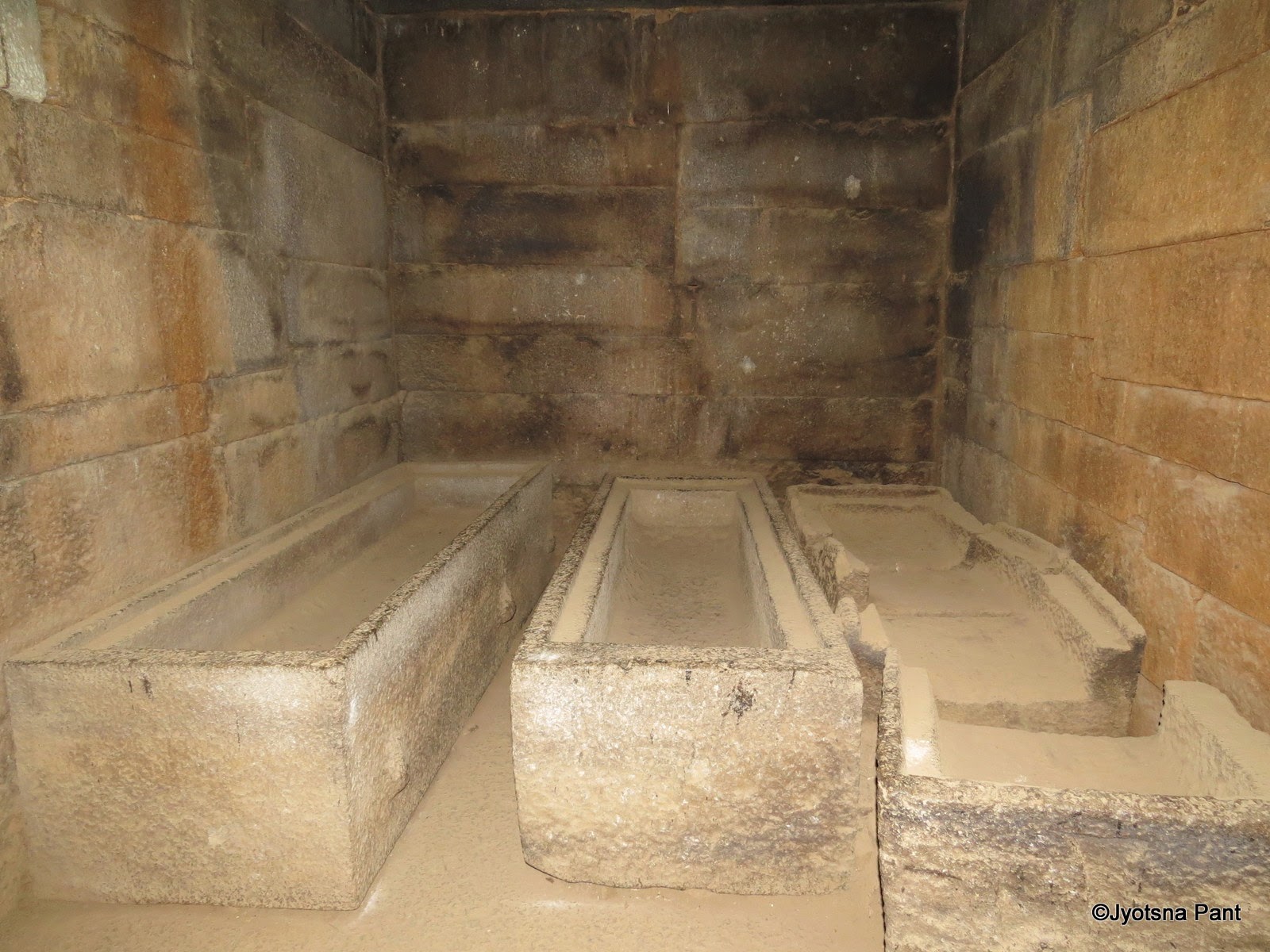
Casks carved from solid rocks in the excavated tombs
Deep  secrets in dark catacombs
As I had stated in my pervious blog, I will not go into historical and archeological facts as I am expert in neither of the two, but will dwell more on the places which make Axum a must see.
The beautiful churches which have the old handwritten bible, Monasteries which are open only to male members of the society.
One of the oldest church of Ethiopia
Church close up view
Huge pillar (Stele) of church
One of the many depiction of history of church
Old holy book on display 
Ancient handwritten Bible
Derez, gireesh and our guide
Monesrty near church under renovationTombs which are plundered, looted of all its precious and valuable things by various invaders and plunderers destroying the tombs and desecrating the well preserved bodies in the tomb.
Burial chambers of Kings
A huge slab of stone at excavation site (raised by then King with Geeze inscriptiopn)
The carved symbols on the rock hard stones, 
Symbols carved on different tombs walls
Exavation site with more and more symbols
The walls made with interlocking of stones, totally without using any type of binding agent (mortar),
Walls of tombs and burrial chambers yet strong , great masonary
The inter connected maze of tombs and rooms 20-30 ft. under the earth, so well designed to preserve the mummies as well as the valuables buried along with the dead kings and nobles.
Intercombing of tombs( exavation site)

While excavation long pipes were added for airation in the deep dugup sites of tombs
Exavation site where 20-30 ft, deep maze of tombs are found
Exavation site which has 20-30 ft. deep interwoven chambers
It makes one wonder how at that time somebody could conceptualize, design and execute such an intricate thing without any sophisticated machines and technology. Well it certainly falsifies the claim that Africa was not developed and had no great scientific, architectural knowledge; if that would have been so, how could they mint their own coin, make such fabulous tombs, obelisks, palaces etc.
The museum of Axum is yet in natal state as they are slowly building it to store and display the exhibits giving a peep to the rich culture, art, craft and history.
The Obelisk or stele as they are called in Ethiopia, are huge pillars beautifully decorated with carved false doors at the bottom and windows on all sides. It is said that King Ezana built the largest of the obelisk which stands 90 meters above the ground. The obelisks were raised by kings and emperors over the burial sites over the graves. One such site is open to public and one can go under the obelisk and see the magnificent place.
Steles
Main Obelisk of Axum
Near a fallen Stele
One of the many other smaller sites of stele
A catacomb beneath a stelewhich has fallen
The obelisk of King Ezana is largest one and was found by Italian soldiers fallen to the ground and in broken state (probably earth quake caused it). They took it as war booty. But later due to intervention by Emperor Haile Selassie and Colonel Mengistu Haile Mariam of communist regime, talks to repatriate King Ezana’s Stele  were initiated but it could be brought successfully without any precondition to Axum. Due to persistent effort of Prime Minister Meles Zenawi and his teams along with the other luminaries. It was a day of jubilation for Ethiopians, especially for Axumites. I was told by our escort Derez that national holiday was declared and celebrations were organized on the day King Ezana’s stele was erected after bringing it back from Italy.


King Ezana's Stele
Stelle like pillar (New) in Oldest Church in Axum
Since the modern city of Axum is developed over the old buried city thus there are many cultivated lands under which the lost civilization is waiting to be excavated and the archeological valuables to be brought out so that the lost city can be found again and have its proud place under the sky not deep in the earth.
Walking through the place I could see the pottery items, some beads peeping from the ground and was told that this place is literally littered with such things, many Ethiopians do not know the value of these items. They are the poor villagers who are concerned about their farm land being taken away if the whole Axum is declared a world heritage site.
Artifacts embedded on earth people walking on them
Farming over Lost civilization (Ancient Axum)
Pillars raised by then King with Geeze inscriptiopn
Government of Ethiopia is trying to find a way which will allow them to excavate the place but also know the importance of the cultivated land above the lost civilization. Villagers need to do farming and grazing their beasts for the living.  Hope one day an agreement will be reached with Axumites and the real full scale exaction will take place to bring the glorious past of Axum from the darkness of the earth to the open sunlight for everybody to see and earn Ethiopia specially the Axumites the much needed foreign currency.
These sites are very common in Axum (Mounds of excavated tombs)
Dungur / Addi Kilte is supposed to have the arch of covenant and the palace of Queen Sheeba. There is a palace stretching to vast expanse replete with courtyard, queen’s chambers, small atrium and meets every requirement of then royalty.  The green expanse in and around it makes a very pleasant place to visit.
Outside These sites are very common in Axum (Mounds of excavated tombs) site
Queen Sheeba's Palace Site
 Hearth at Queen Sheeba's Palace
Place for morning ebulition for Queen Sheeba
Just opposite the palace of Queen Sheeba are the cultivated lands where one can see the stele of plain stones jutting above the ground ranging from 2 feet to 20 feet. These are burial ground of lesser nobles where the villagers do farming. These fields are called “Stele fields”. These stele fields can be seen all over while travelling from one village to other in Axum.
Stele Fields
We saw the little boys and girls selling the ancient coins for a pittance (even that pittance is a huge sum for them), which actually have a great value as they are of tremendous historical importance.
It is with the help of united nation that all historical places have now been maintained with great care. Much is required to be done as far as excavation and preserving this old lost civilization is concerned. Stele fields, ancient cities in Axum are falling prey to farming, modern civilization and ignorance of locals about the importance of this great historical legacy.
The hotels in Axum are more in number as compared to Lalibella. From budget hotels to luxury hotels all can be found there. We stayed in a place which gave us bird’s eye view of Axum.


View of Axum from hotel
Great view of Axum from hote
Hotel Sit out 
Wonderful paintings from the local artists
Hotel dining hall
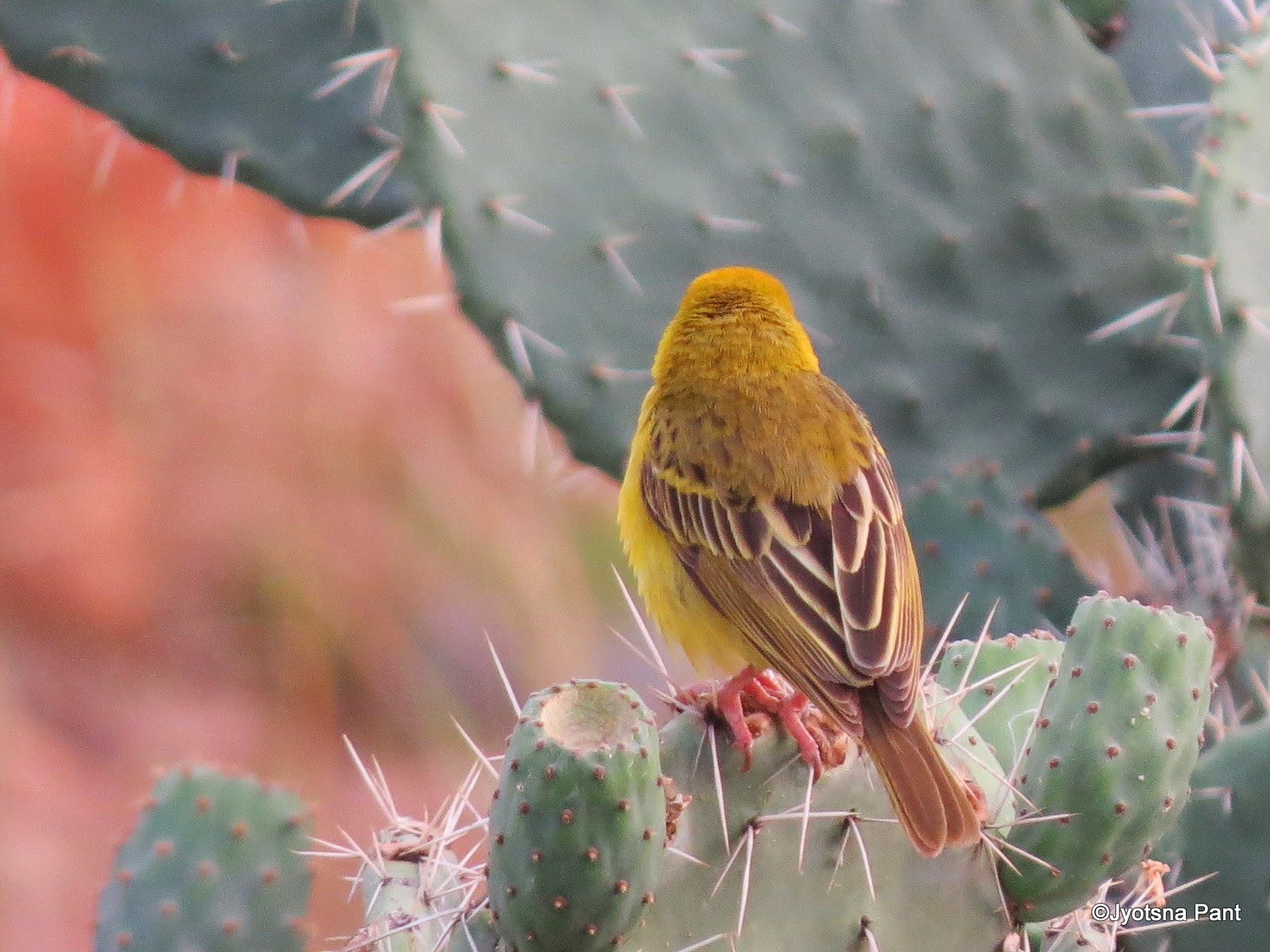
The stay was comfortable, the staff courteous and the hotel very neat and hygienically maintained. What I liked best about the hotel was the greenery was so well preserved that the habitat of various species of birds and small animals remained unharmed. We could see the birds, squirrels and many other small creatures, roaming freely without any danger to them or the residents of the hotel.
We love to nest here
Not only humans we also love this hotel
Wow we are not distubed here and lots to eat
We are well fed. Lucky we all!

Birds on the hotel sit out place
When is the lunch time ?
We should have sat inside


I have finished my lunch thanks to hotel
Finally got mu morsel


Waithing for the nut
From Axum we started to the last leg of our tour of Northern Ethiopia “Mekelle”

Amazing views on the way to Mekelle from Axum
Cofee ceremony